


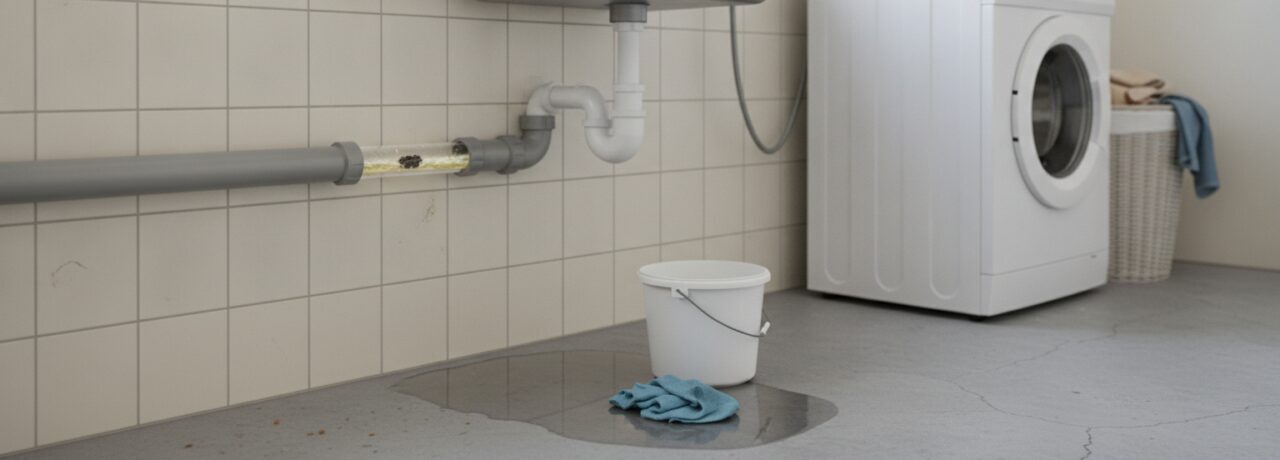


Do you ever pour grease or oil down the sink after frying chips or a steak? That might seem convenient, but did you know that your pipes will eventually become severely clogged this way? The problem starts when the grease cools down. The grease solidifies in your drain, causing a thick layer to stick to the inside. This forms a blockage that prevents water from draining properly.
In addition to foul odors from the sink, grease residue can cause blockages in the sewer system. In sewer pipes, grease and oil adhere to other debris, such as food scraps and hair. This results in a stubborn blockage that is, unfortunately, difficult to resolve with a plunger or drain cleaner.
Pipes and sewers simply cannot withstand the constant buildup of oil and cooking grease. Over time, even professional drain cleaning companies struggle to cope with diluted grease, oil, sludge, and limescale deposits that combine to clog pipes. This results in flooding and expensive repairs. It is better to keep grease and oil separate and not dispose of them down the sink.
What happens when you rinse away grease and oil
When you rinse leftover fat and oil down the sink after frying, you might not immediately notice anything strange. However, if you rinse this away frequently, you are unknowingly building up a dangerous layer on the inside of your pipes. Fat and oil appear liquid at warm temperatures, but as soon as they come into contact with cold water and metal or PVC pipes, these substances solidify rapidly. Throughout the Netherlands, for example in cities like Amsterdam, Eindhoven, and Groningen, users regularly suffer from clogged drains as a result. The difference between liquid and solidified fat lies in the composition: fats from, for example, frying oil, margarine, and butter contain many saturated fatty acids that harden more quickly. As soon as these particles adhere to the pipe wall, a greasy deposit slowly but surely forms, clumping together with hair, food residue, and other particles.
Formation of fat deposits: the step-by-step process
- Drain grease and oil with warm waterIn the kitchen, oil is usually rinsed off with hot water. It seems harmless, but this is actually the beginning of trouble.
- Cooling and solidification in the pipeOnce inside the pipe, the temperature drops rapidly, causing oil and grease to partially solidify and adhere to the edge of the sewer.
- Build-up of accumulationsThis caked-on mass acts as an adhesive for other contaminants, such as soap residue and food debris, causing the narrowing to worsen rapidly.
- Complete blockageIf the passage becomes increasingly smaller, water drains away less effectively and a complete blockage can occur, resulting in sewage odors and leakage.

Reasons why grease and oil are so harmful to pipes
The materials from which drainpipes are made, such as plastic (PVC) and cast iron, attract grease as soon as they cool down. Ecolomatizing fatty acids creep into the small irregularities of pipes and are difficult to remove from there. Rioolbeheer Nederland and the Urban Drainage Knowledge Centre confirm that 75% of all sewer blockage complaints are related to grease buildup. The addition of soap and shampoo creates complex fatty acids, such as calcium and magnesium salts, which harden completely, known in the industry as so-called 'fatbergs'. A fatberg weighing over 130 tons was once removed in London. These types of blockage problems are also notorious in Rotterdam. When a domestic installation has multiple bends and narrow sections, blockages often occur more quickly. As a result, drainpipes are slowly but surely sealed off, leading to backflow, flooding in kitchens, and damage to the internal sewer system.
Types of grease pollution and their consequences
- Animal fats: Derived from meat, butter, and gravy, these fats solidify quickly and adhere directly to the inner walls.
- Vegetable oilsThink of sunflower oil and olive oil, which admittedly solidify less quickly but do form a 'film' and cause long-lasting deposits.
- Mixed domestic wastewater: In combination with soap and food residue, fats precipitate in the form of lumps, causing blockages.
- Industrial residual greaseHospitality businesses discharge large quantities, causing more severe blockages in city and neighborhood sewers.
Prevent and solve fat problems
By handling oil residues consciously and flushing as little as possible down the sink, you prevent the buildup of grease in the pipes. The Municipality of Rotterdam, for example, has installed special grease traps for hospitality establishments to reduce large-scale nuisance. For households, the rule is: leave cooled grease in an empty container or plastic bottle, dispose of it separately, or throw it in the waste bin. This significantly reduces the risk of stubborn blockages. If you regularly notice that the water is draining slowly or a musty odor is coming from the drain, prompt action is essential. A specialist such as Ontstoppen.nl employs effective techniques to loosen grease residues. Think of high-pressure flushing or mechanical cleaning with spring machines. If you want to know which options best suit your situation and are curious about our fixed rates, such as our no cure no pay policy, a fixed rate of €169,50 including VAT (single blockage), or the all-in flushing rate of €296,45 (blocked main sewer), take a look now. our rates for grease and oil blockages.
Solutions and advice from experts
Brigitta Callenbach, ambassador for the Rioned Foundation, and Erik Dekker, advisor to the Union of Water Boards, have been pointing out for years that only large-scale awareness will tackle the problem. Your own household, however, benefits directly from simple measures:
- Use a grease trap: Store oil and fat separately and dispose of them separately; this is also possible at supermarkets and recycling centers.
- Regular inspection by professionalsAnnual inspection by specialized drain cleaning services prevents major problems and unexpected costs.
- Avoid chemical drain cleanersThey do not dissolve grease, but can damage pipes and worsen the problem.
- Clean with baking soda or hot water: Sometimes works for initial deposits, but does not address the root of the problem.
Request expert help or a free quote immediately.
Are you experiencing problems yourself due to stubborn blockages caused by grease and oil, or do you want to know how to prevent future plumbing problems? Houseplants, pets, and electrical equipment may demand your attention, but nothing is as frustrating as a clogged kitchen drain. Do not hesitate to contact Ontstoppen.nl to immediately a Free quote for unclogging the sink caused by grease and oil to request. Choose certainty, have your pipes inspected and prevent costly damage!
Frequently asked questions
1. Why do grease and oil cause so much damage in the sink drain?
When you rinse grease or oil down the sink, it solidifies as soon as it cools and mixes with cold water in the pipes. This solidified grease adheres rapidly to the inner walls of your drainpipe, building up a thick, greasy buildup layer by layer. Eventually, this creates a stubborn blockage that is much harder to remove than, for example, a pile of hair or food scraps.
Moreover, these grease buildup attracts dirt, hair, and other debris, causing the blockage to become increasingly stubborn. Often, you only notice that your drain is becoming clogged when the water drains slowly or when you encounter an unpleasant odor coming from the drain. If you want to know more about professional solutions for a clogged sink drain, click here: have sink blockage resolved immediately.
2. How can you prevent grease and oil from clogging your pipes?
The best way to prevent pipe damage caused by grease and oil is simply not to pour these substances down your sink. Catch cooking fat and frying oil in an empty milk carton or a special grease collection container and drop it off at a collection point, such as that of the municipality or supermarkets. It is also better to wipe small residues out of the pan with a paper towel before washing it.
Additionally, ensure you clean the drain regularly and flush your drain occasionally with a liter of boiling water. This can help wash away any remaining grease immediately before it can build up. Do you think your pipes are already becoming clogged? Discover our all-in service for a fast and professional solution: clogged drain all-in service.
3. What problems can arise if you regularly rinse away oil and grease?
Repeatedly flushing oil and grease down the drain not only causes blockages but can also lead to leaks, unpleasant odors, and even significant water damage. The pressure on the pipes increases, especially if the water has nowhere to go, resulting in weak spots in your piping network bursting or leaking.
In addition, grease buildup attracts pests such as drain flies, as they love organic waste and the damp climate of your drain. Especially in older homes with cast iron pipes, the consequences can be even more serious, as rust formation and damage set in much faster. Do you want quick help unclogging your drain? View the options here: have your drain unclogged with a guarantee.
4. What exactly happens to grease and oil when they end up in the pipes?
As soon as grease and oil end up in your drain, they cool down almost immediately and turn into a solid, soapy substance on the pipe wall. Especially in the Netherlands, where tap water is relatively cold, a hard crust forms quickly that gets thicker after every flush.
In addition, grease undergoes a chemical reaction with hard tap water: the fatty acids bind with calcium and form so-called “grease stones” or “soaps,” which act as solid blockages in the pipe. This effect makes removing grease buildup particularly difficult without professional equipment. Want to know more about having your kitchen drain professionally unclogged? Then click here for information about our express service: professional kitchen drain unclogged.
5. Why can even a little fat cause major blockages?
Even a small amount of grease or oil can quickly cause a buildup if repeatedly flushed down the drain. Grease acts like a magnet, collecting everything that ends up in your drain along the way: dirt, food scraps, and even small stones. Within a few weeks, such a buildup can develop into a substantial blockage that can even clog the main sewer line.
With a stubborn blockage, you can quickly face high costs, as ordinary household remedies often do not work. Only a professional unblocking service can provide a solution. Looking for an experienced specialist to unclog your sink? Read more about our approach: have your sink drain unclogged by a specialist.


